
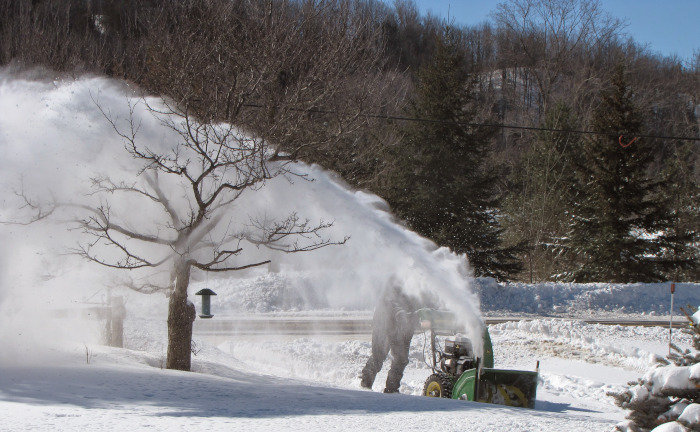
I have had this topic in mind for quite a long time but have hesitated to write about it. Why? Because it is probably one of the most controversial topics in amateur radio. However, at the risk of causing a heated debate, and because I am still snowed in and unable to get out to the parks to play radio, I decided to go for it.
First let me define what is being referred to here. Rag chewers are hams who enjoy long conversations on-air. Hard core rag chewers sometimes deride other operators who prefer very short contest-style exchanges; “59 goodbye” is not a real QSO” they say. Is that because those rag chewers feel they are now a vulnerable minority within the hobby?
Don’t believe me? We only have to look at the immense popularity of FT8 for strong evidence. I am not a fan of FT8, by the way. Several years ago I gave it a try and made precisely one QSO before deciding it wasn’t right for me. As far as I am aware it is impossible to be an FT8 rag chewer. The mode only supports very short, impersonal exchanges. During a phase in my ham career when I did a lot of digital work I often had long conversations using PSK31. FT8 has largely replaced PSK31 and other conversational modes. I wonder why.
Another area where “contest-style” exchanges are the norm can be found in the growing “outdoors-on-the-air” activities like Summits On The Air (SOTA) and Parks On The Air (POTA). It is rare to find rag chewers there. It has happened to me though. During a couple of POTA activations I received calls from a station who wanted to rag chew while I was working a pile-up. I didn’t want to be rude to the caller but, at the same time, I needed to complete my activation. It was a choice; disappoint the rag chewer or disappoint all the hunters who were trying to work me.
How’s your potatoes?
Personally I lean toward shorter exchanges but I do enjoy a half-hour rag chew with a couple of friends every Wednesday afternoon. It is a CW conversation in which we discuss all kinds of topics. I give reports on the ships that have visited the harbor in my home town. My friends, who both live on farms, talk about their potato crops or repairing their Beverage antennas that have been brought down by snowmobiles in the winter. We have known each other for years and joke around quite a bit.
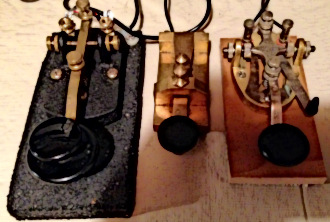
Now that leads me to ask an important question about rag chewing. I am a CW operator who rarely uses SSB so I can speak only about CW exchanges. While listening to other people’s QSOs (just because I enjoy hearing Morse Code) I typically hear an exchange of signal reports, first names, QTH, weather, radio equipment and antenna, followed by “thanks for the fine business QSO, see you again down the log, 73”. That format is useful for new operators who are still learning the code, but is it really any better than, say a POTA exchange: “thanks for the call, your RST is 599 in Ontario, Canada, 73”?
“Better” depends on your point-of-view I guess. I have participated in QSOs with that format but with little interest in the temperature at the other ham’s QTH. Now, if he had wanted to talk about his potato crop …
Some rag chews go further than the basics. Age is often discussed, and how long the ham has been licensed. You can make good friends during radio contacts; you can develop a strong rapport with the guy at the other end. “Hey, I’m 79 too, what month were you born in”. “No kidding, same here”. “Come on, what date; one of us must be slightly older surely?” “Ok, you’re a few days older than me, wow”.
Help! Help! The paranoids are chasing me!
Keep in mind that QSOs are not private. There are 7 billion people in the world who could potentially be listening. Some of them could be hostile; foreign governments, spy agencies, hackers, scammers and spammers. You just gave them your date of birth. They can look up your home address in online databases. All they need now is your credit card and Social Insurance numbers. Oh, and they know you have valuable equipment in your home. As actor John Wayne once said, “talk low, talk slow and don’t talk too much”.
I guess that’s why they call it the blues
I once took a course on consulting as a career option. I spent most of my working life in the high tech industry in which boom and bust cycles were common. I was downsized out of a job three times and, instead of describing myself as unemployed I chose to identify as a self-employed consultant. It is much easier to get re-employed if you have a job already – even if you are your own employer.
Anyway, the consulting course was very interesting. Our tutors were unemployed people who had a skill to sell. During the course I took a module that described people in terms of “color groups”. No, nothing to do with race. We each answered a set of questions and, based on our responses we were categorized into personality types. The groups were Orange, Red, Blue and Green. Orange types were outgoing, individualistic leaders who often rushed into decisions without prolonged considerations. I honestly don’t recall what the Red group stood for, but Greens were the technicians and engineers and Blues were the passionate types who cared deeply about people, who never rushed into anything without first consulting all the stakeholders. We were taught that success in consulting required recognizing and mirroring a client’s personality type because, for example, Orange and Blue are unlikely to get along.
Based on what I learned in that course I wonder if we could use the technique to explain the differences in amateur radio operators. We probably all have a bit of Green in our personality. We couldn’t get licensed without at least a small amount of technical interest and understanding. Then maybe the contesters are the Orange types: driven to get the highest score possible with the shortest possible exchange: “59 QRZ?”
So that leaves the rag chewers as the “Blues”. They will spend a long time on the air chatting with another ham (and 7 billion listeners) discussing all kinds of topics related to their amateur radio activities, other interests, plans for the future, family and whatever else comes to mind.
But wait, what about the “RST, name, QTH, weather, Rig, Ant, thanks, 73” types? Well, they maybe aren’t Orange and possibly not Blue either. Malevolent monitors are likely to disregard what they hear, so these hams are safe. Could they be Green?
How you approach the hobby seems to be dictated by your personality. I have met many hams whose greatest enjoyment revolves around making and meeting friends on nets. I have met just as many who don’t have the patience for long chats. They prefer short, sharp contacts. They want to move along quickly, make new contacts in exotic locations and enjoy contesting, DX and DXpeditions.
Consultant psychologists may like to slot us all into personality groups and tell us that we won’t get along with hams in other groups. I hope they are wrong. Whether we are individualistic, go-get-em, rush-rush, gotta beat last year’s score types, or look forward to the weekly net so we can have a nice long chat with our buddies types, we are all bound together by a passionate interest in radio. Isn’t that what really counts?
Help support HamRadioOutsidetheBox
No “tip-jar”, “buy me a coffee”, Patreon, or Amazon links here. I enjoy my hobby and I enjoy writing about it. If you would like to support this blog please follow/subscribe using the link at the bottom of my home page, or like, comment (links at the bottom of each post), repost or share links to my posts on social media. If you would like to email me directly you will find my email address on my QRZ.com page. Thank you!
The following copyright notice applies to all content on this blog.

This work is licensed under a Creative Commons Attribution-NonCommercial-NoDerivatives 4.0 International License.
Discover more from Ham Radio Outside the Box
Subscribe to get the latest posts sent to your email.
 Ham Radio Outside the Box
John,
Thanks for the article. This is something that crosses my mind quite a bit as well. The short exchanges do get rote, for sure. Since I have two very small children, my radioactivity is limited. As someone who mainly chases POTA during the twenty minute commute home and only gets to activate a half dozen times a year, these short contacts are essential to keeping the code knife sharp.
I still consider myself a beginner code op, but I’m getting better. The more frequently I operate, the more the code becomes automatic.
Personally, I’d love to become more conversational in CW and the opening exchanges of a QSO, the ones regarding antennas, rigs, and power output do give me some, albeit limited, experience in ragchewing. Thankfully, I have an extra class license and a penchant for 30m. These two things combined are useful for finding ops who are willing to engage in shorter conversations.
LikeLiked by 1 person
What’s great about this hobby is that there is something for everyone. POTA got me back into HF and CW again after a long absence. And, I appreciate the short QSO format because it enables me to be “good” at CW. If you stray too far off script, I am lost. To be a conversational on CW, I need to slow way down, which is not generally a good fit for my outdoor operating style.
Back in the olden days we had a 2M FM simplex “group” here in the City that would get on in the evenings and just hang out, shootin’ the breeze. I miss those days.
LikeLike
Hey Matt, I’m with you on CW short exchanges. I have a very short attention span and if an exchange goes on too long my mind begins to wander. Actually that is the case even for voice conversations! John Corby, VA3KOT HamRadioOutsideTheBox.ca
LikeLike
I’m just a listener, and usually to broadcasts rather than ham radio, but I suppose most of our relevant data is on the internet, ready for the bad guys to help themselves to it.
😉
But in any conversation, you’ll usually notice if your interlocutor wants a long “chew” or if he’s in a hurry.
The best way to have long chats are probably regular talking shops (for those who are into them).
LikeLike