
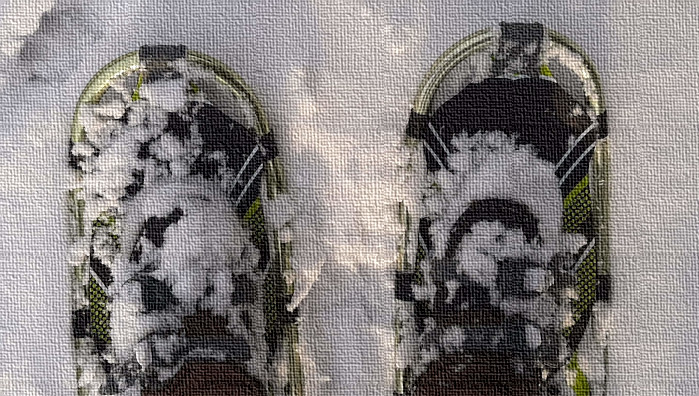
Winter came suddenly to southern Ontario this year – and it hit hard. The Town of Gravenhurst, at the southern end of the popular summer destination of Muskoka was whacked with more than three feet of snow in a single storm. We manage winter very well in this part of the world, but that sudden deluge closed the major highway that passes through the town. Gravenhurst declared a state of emergency.
My wife and I like to vacation in Gravenhurst every spring. We enjoy a tour boat trip on Lake Muskoka. I like to visit the site of a former World War 2 P.O.W. camp on the shore of the lake and, of course, to activate a couple of POTA entities in the area.

One of my favorite POTA sites is Torrance Barrens Conservation Reserve (CA-1669), a park I have activated three times. Torrance Barrens is located along the winding rural regional road 13, otherwise known as Southwood Road. It is highly unlikely that the site is currently accessible due to the storm.
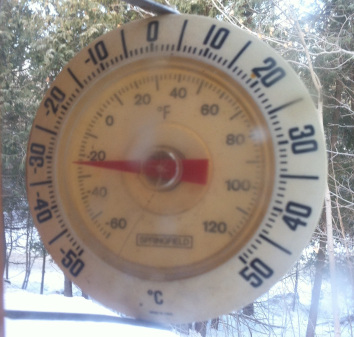
So what can POTA diehards do in the winter when the snow piles up deep and crisp and even and temperatures plummet into well below freezing territory? I know of a couple of hams in my area who thrive in such conditions. They wait to play outdoor radio until temperatures have plummeted well below zero degrees Celsius. Last year they set up an overnight wild camp when the mercury hit -23 degrees Celsius. I inquired why they had ventured out in such conditions; the response: “we waited for the coldest temperature; we like it that way”.
This winter tale gets even more interesting. These two gentlemen didn’t just show up at a park and operate from inside the comfort of their vehicle; they donned their snow shoes and bushwhacked into their unofficial camp site – deep in the bush – carrying radios and camping equipment on their backs. The overnight wild camp became an outdoor ham radio station operating from inside a hot tent (yes they carried a camping wood stove into the site too).
Well, it helps to be young and physically fit. Those of us who are past our best-by dates may be a little less adventurous, so what can we do?

In recent years I too have strapped on snow shoes and ventured into local parks to enjoy some sub-zero radio time. My home made radio sled helped me haul my gear into my chosen operating site. There are a number of things to think about which make an adventure like this less dangerous and more enjoyable. I should stress that extreme cold can be very dangerous indeed. The wisdom of age makes us less impulsive and more aware of how easy it is to get into serious danger unless careful precautions are made beforehand.

Perhaps step one should be to drive a well-maintained vehicle built to withstand severe winter conditions. My own vehicle is a RAM 1500 pickup truck. It’s 5.6L V8 engine is powerful enough to push through quite deep snow – especially since the truck has both high and low range 4-wheel drive. The hemispherical piston design is touted to provide both powerful torque and fuel economy. My own experience bears out the manufacturer’s claims. Not quite up to “expedition vehicle” standards but powerful and versatile enough to negotiate public roads in any season. In my part of the world, winter tires are almost a requirement. My insurer offers a discount to drivers who install them.
Of course, even the best vehicle can be overwhelmed by the weather or road conditions leaving driver and passengers stranded on the way to a POTA activation. A good snow shovel, booster cables, a high-load tow strap, plenty of winter windshield washer fluid, a Lithium battery booster and a tool kit are essential. But what about creature comforts too? I carry a stout canvas bag with multiple layers of spare warm clothing and blankets. I also carry a compact backpacking butane stove, spare fuel canister and a couple of packs of Ramen noodles. Water freezes inside a vehicle but there is plenty of snow outside that can be melted for cooking and drinking purposes.
When you have successfully arrived at your operating site thoughts can turn to how to enjoy your radio time. Can radios survive winter exposure? Most radios can withstand typical winter sub-zero temperatures although modern sets with color panadapter displays may be susceptible. The big enemy is sudden temperature changes. Modern radios have very delicate circuit boards with tiny copper traces that might be damaged by rapid expansion and contraction. Sudden temperature changes can also result in condensation forming inside the radio. I recommend doing everything possible to prevent moisture getting inside the rig – plug those holes!
Be aware of the possible dangers of static building up on your antenna. Static buildup can be caused by blowing snow or even just by strong winds. Static may cause erratic radio performance or even equipment damage.
And another winter tip: every ham radio has an internal heater – it’s called the power amplifier. It works well if you do a lot of transmitting, such as during a POTA activation.
I am personally not a fan of operating from inside my vehicle. When I say I enjoy operating outside in the “Big Blue Sky Shack”, I mean completely outside, not inside a vehicle. I know others do not feel the same way and are happy to use their “shack-in-a-truck” at any time of year. Sometimes the weather can be just a bit too extreme and when that happens the comfort of a truck is an overwhelming temptation. Fortunately POTA rules do not dictate whether we have to operate outside our vehicles. Not so for SOTA whose rules dictate that “thou shalt not even think about staying in thy motor carriage to operate, nor shall any part of thy station be connected in any way with thy carriage”. I admire SOTA operators who adhere to that rule.
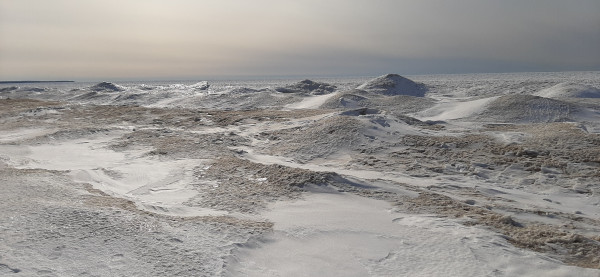
Winter in southern Ontario goes on for a long time. Some people joke that we have 4 seasons: Early Winter, Mid-Winter, Late Winter and Summer. Our summers are brief but glorious. A few years ago I visited the High Arctic where the residents would scoff at southern Ontario’s “brief” summer. Summer in the High Arctic is the short few weeks when the Sun actually struggles above the horizon and the snow gets warmer! I was there at the end of June and there was a severe snow blizzard. The ground never thaws – it is called “permafrost” – hard enough to land jet aircraft without building a paved runway!
Nonetheless, in between winter snow storms here in the deep south (44 degrees north) we do get brief periods of tolerable weather. When this happens a pop-up tent is useful. I have one that can be pulled out of its bag and completely erected in just a couple of minutes. Sometimes, once sheltered from the wind, low temperatures can be tolerable for the amount of time it takes to complete a POTA activation. Another option I carry in my truck is a home made “bothy bag”. This Scottish invention is an oversized bag that can be thrown over one’s head in a matter of seconds to provide shelter from the wind. There is enough room inside my bothy bag for a camping stool and all my radio equipment. It’s actually quite a cosy way to operate!
There are numerous, very informative videos online giving sage advice on how to survive camping outdoors in extreme cold. They are interesting to watch but, although I do POTA on throughout the winter, I prefer to wait for milder days when the Sun is shining, the wind is low and the temperature nudges over the freezing mark. Or, there remains the option of the “shack-in-a-truck”. Winter in Canada and the 30% of the continental United States that is actually higher in latitude than the balmy deep south of southern Ontario is a challenge but it can also be very enjoyable. We enjoy skiing, snow-shoeing, snowmobiling, hockey … and ham radio!
Help support HamRadioOutsidetheBox
No “tip-jar”, “buy me a coffee”, Patreon, or Amazon links here. I enjoy my hobby and I enjoy writing about it. If you would like to support this blog please follow/subscribe using the link at the bottom of my home page, or like, comment (links at the bottom of each post), repost or share links to my posts on social media. If you would like to email me directly you will find my email address on my QRZ.com page. Thank you!
The following copyright notice applies to all content on this blog.

This work is licensed under a Creative Commons Attribution-NonCommercial-NoDerivatives 4.0 International License.
Discover more from Ham Radio Outside the Box
Subscribe to get the latest posts sent to your email.
 Ham Radio Outside the Box